

Tidal Bass Program increases recreational opportunities through stocking efforts
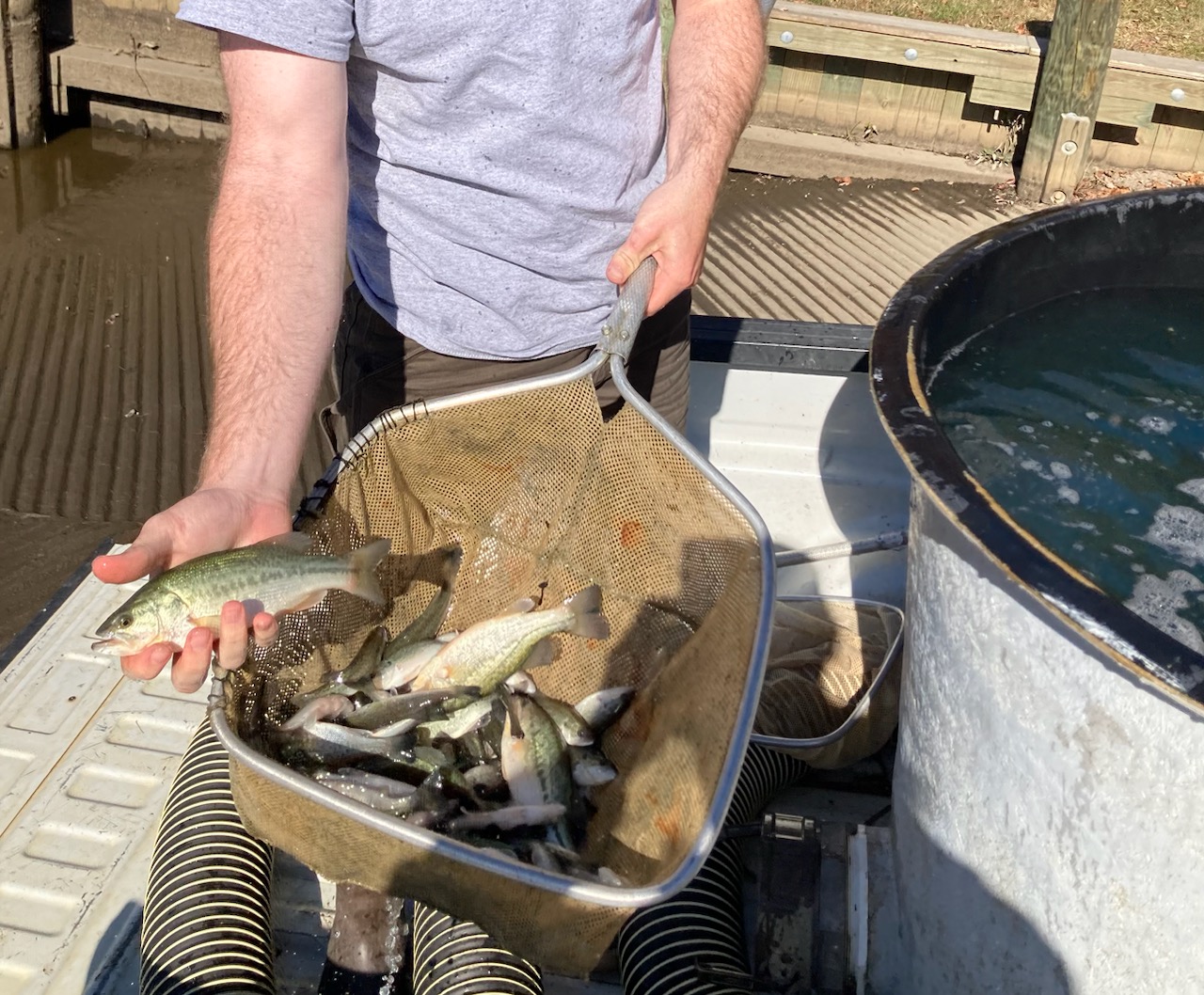
Each spring, Department of Natural Resources biologists collect largemouth bass from the Potomac River to spawn at the Joseph Manning Hatchery at Cedarville State Forest. Maryland DNR photo
Since the early 1980s, the Maryland Department of Natural Resources (DNR) has stocked more than six million largemouth bass in tidal rivers. This initiative aims to supplement established populations and enhance opportunities for Maryland anglers.
Tidal bass fishing is important to Maryland recreationally and economically, as each year DNR permits more than 400 tournaments for anglers to pursue black bass (the genus to which largemouth bass belong).
The stocking effort is an ongoing, year-long effort that is paid for by state fishing license fees.
The process begins each April with the collection of broodstock, followed by the release of young fish at different life stages into tidal rivers from May through early November.
Spring
Each spring, as water temperatures rise, fisheries biologists use an electrofishing boat to collect largemouth bass from the Potomac River to spawn at the Joseph Manning Hatchery at Cedarville State Forest. Twenty to 30 bass are collected with a ratio of two to three males for each female. These broodstock are moved into hatchery ponds where they naturally spawn, leaving the young in a predator-free environment. Once the young bass have consumed their yolk sacs, the built-in nutrient source they are born with, the adult broodstock are removed from the ponds and returned to their original collection sites on the Potomac River.
Conditions outside the hatchery’s control often determine the number of fry—newly hatched bass—produced. Success depends on variables like temperature, the timing of the spawn, and the quantity of zooplankton available for the fry to eat. In 2025, conditions were near perfect, and Manning Hatchery ponds produced substantially more fry than the hatchery has the capacity to raise to larger target sizes.
The extra fry are the first fish to be stocked during the year. They are sent to specific areas of Maryland’s tidal waters with the best juvenile habitat to support their survival.
This prime juvenile habitat typically consists of shallow water with an abundance of submerged aquatic vegetation and large woody debris. These habitats offer protection from predators and abundant food for the young bass. By stocking large amounts of young fish in prime habitats, DNR can efficiently supplement largemouth bass populations in areas where they are most likely to thrive. In 2025, prime habitat areas in the Potomac and Patuxent rivers were stocked with 40,000 bass fry.
Summer
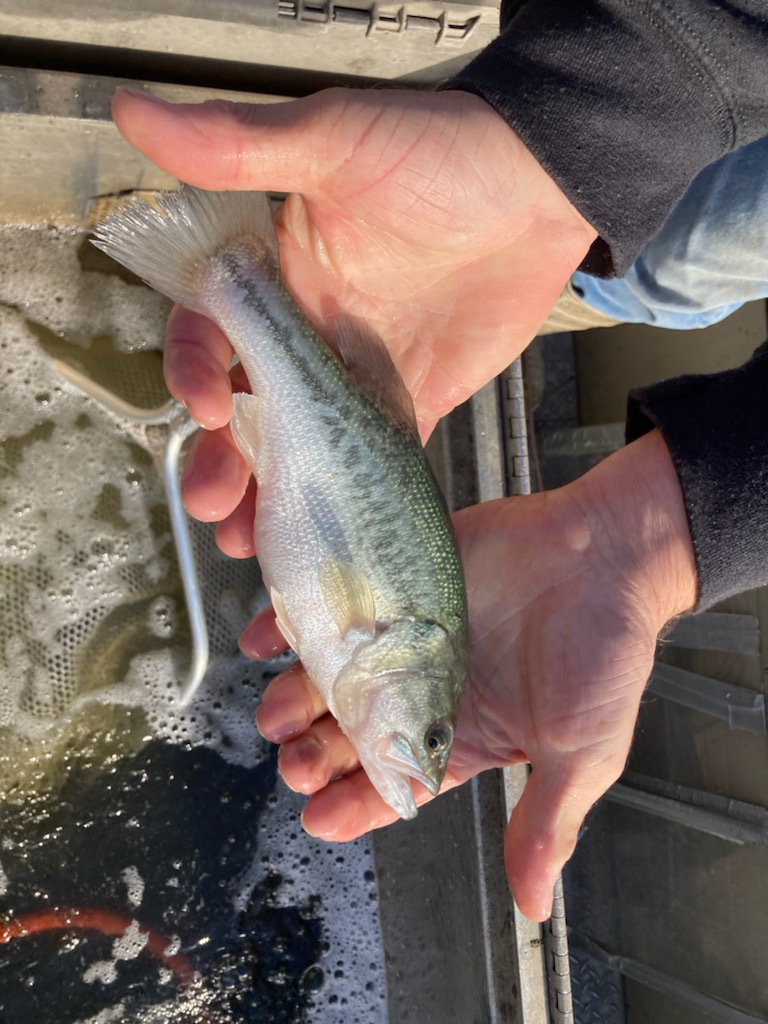
Maryand DNR photo
Fish that are not stocked in May either remain in hatchery ponds or are moved to large indoor tanks, depending on the targeted stocking size. Fish raised in hatchery ponds are grown to an average size of two to four inches. These fish have an increased probability of survival compared to fry, but still require stocking in locations with quality habitat, so they can easily find food and protect themselves from predators. The 2-to-4-inch fish are typically released in June when they reach their target size and when aquatic vegetation in tidal fisheries is more abundant. In 2025, more than 26,000 fish of this size were stocked into the Nanticoke, Choptank, Potomac, Wicomico, and Patapsco rivers, as well as Marshyhope Creek.
Fall
Fish moved to indoor tanks have a target size of four inches or greater and are typically released in October or early November because of the additional time and feeding required to reach these larger sizes. These fish are raised with the help of a bead filter, purchased with donations from anglers to the Black Bass Conservation Fund. The bead filter maintains water quality and allows a high density of fish to grow in tanks that are significantly smaller than the hatchery ponds. The filter allows DNR to stock around 4,000 more four-inch or greater bass each year.
These larger fish have the highest chance of survival and can be stocked in fisheries that may lack high-quality juvenile habitat but can support quality fisheries due to abundant forage and adult habitat. In 2025, 4,375 of these fish were stocked in the Middle, Choptank, and Patapsco rivers, as well as Marshyhope and Tuckahoe creeks.
Maximizing Stocking Success
As the target size for stocking increases, the time and food required to reach that goal also increases. This results in a trade-off between the number of fish and the size of fish that can be stocked. The decision on where, when, and what size to stock is determined by available habitat and results from the Tidal Bass Survey, the department’s survey monitoring the long-term health and trends of our tidal bass fisheries. If you are interested in the results of this year’s tidal bass survey, they can be found in the Black Bass Annual Review.
Choosing the stocking locations and the size of fish to be stocked by habitat ensures that stocked fish have the highest chance of survival to be caught by anglers.
Additionally, prioritizing fisheries that may be in most need of stocking according to the results from the Tidal Bass Survey also ensures that fisheries that most need supplemental stocking receive fish, ensuring that Maryland anglers fishing for bass in our tidal rivers get the most bang for their buck.
This work is supported by funding provided by the purchase of Maryland fishing licenses, the Sportfish Restoration Act, and the Black Bass Conservation Fund. More information about the conservation fund and how to donate are on the DNR website.
